





À propos d’EVO ICLTM
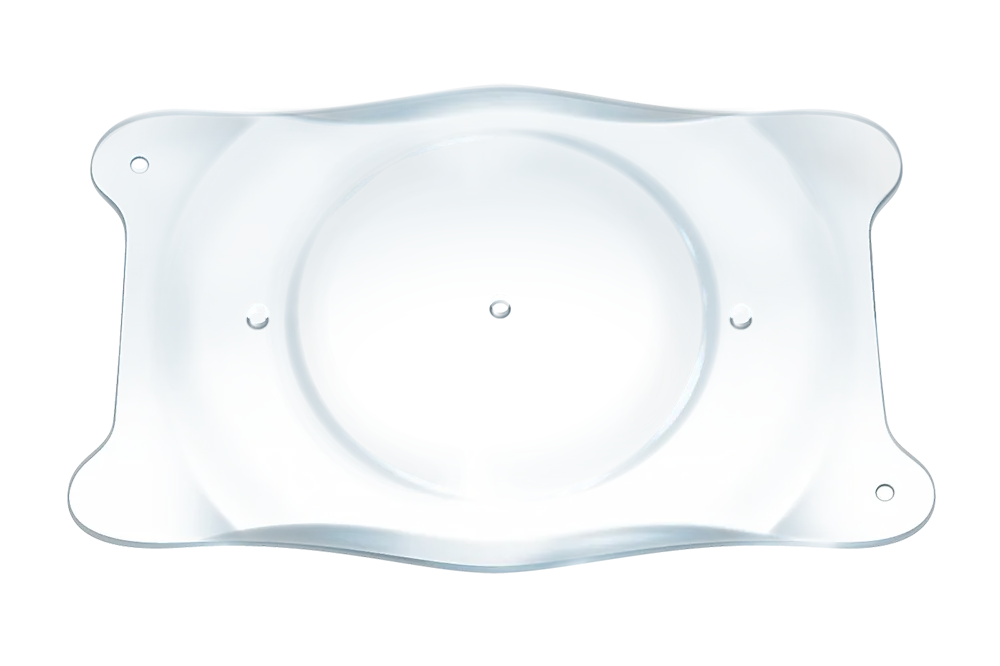
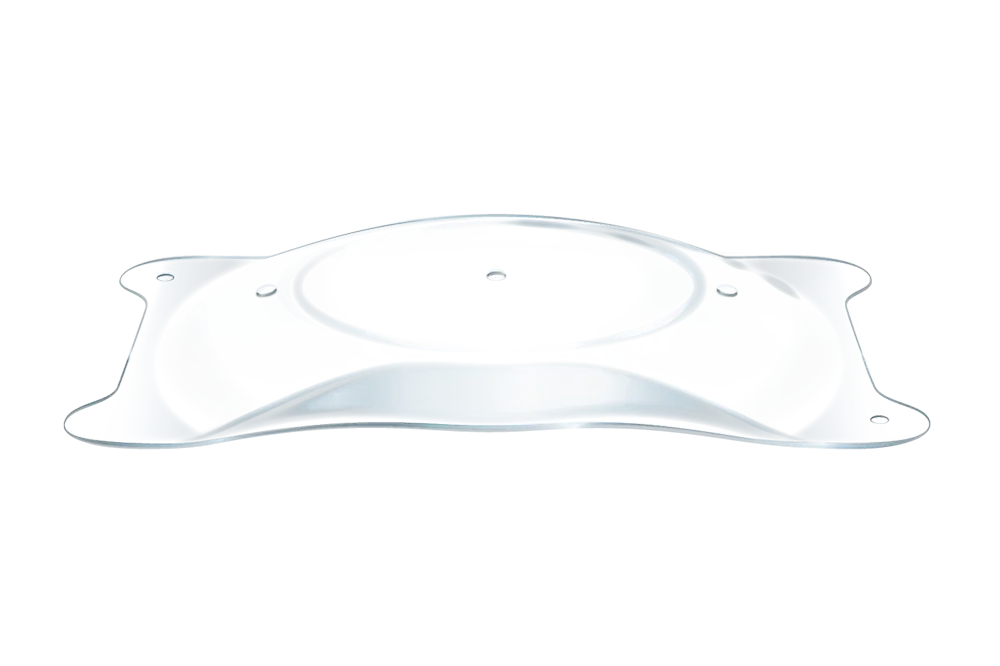
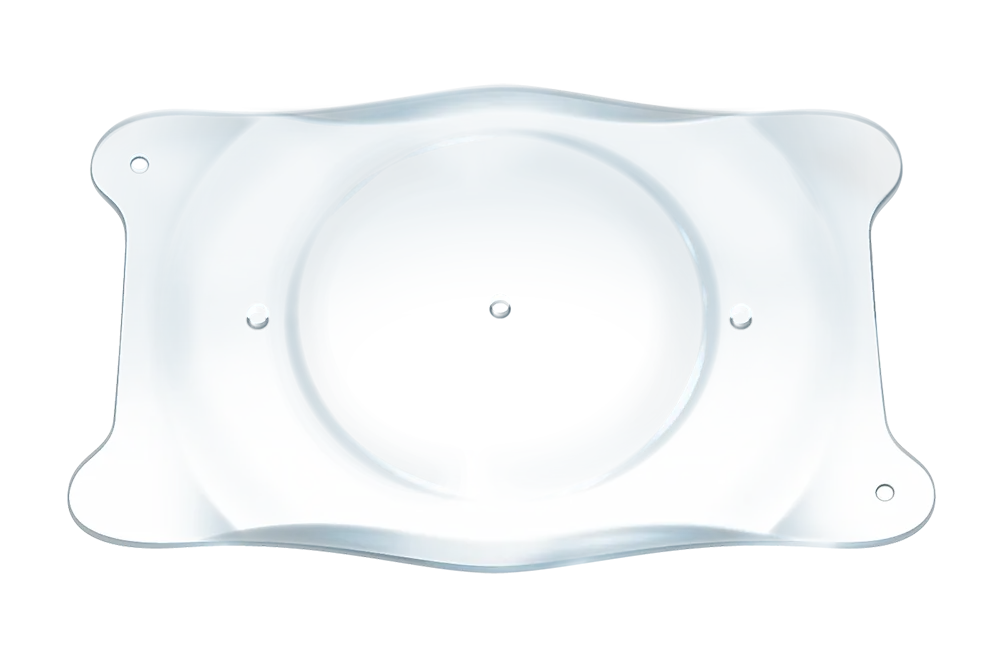
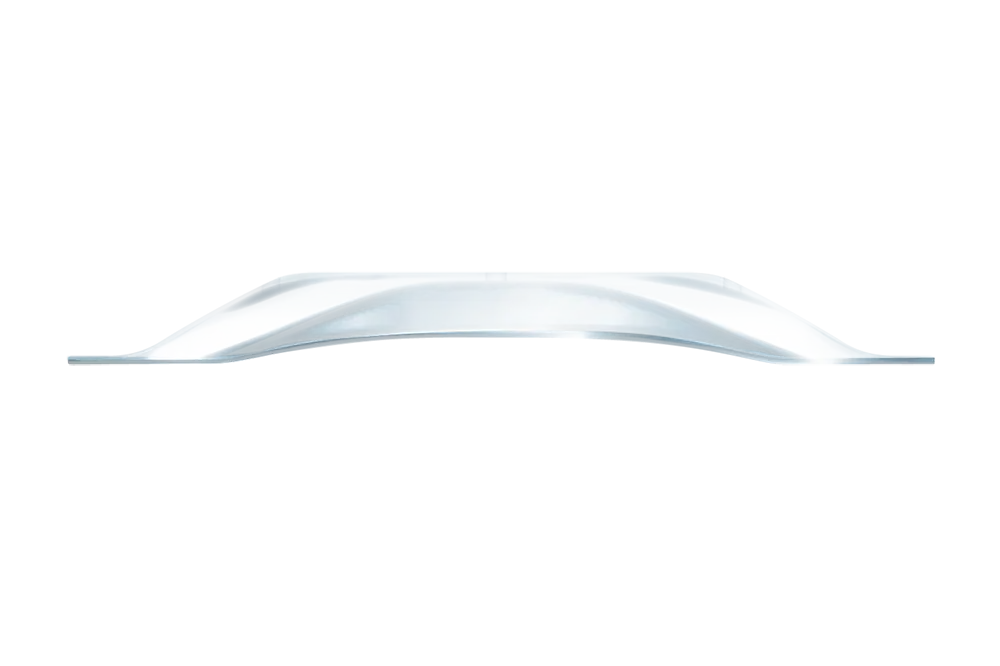
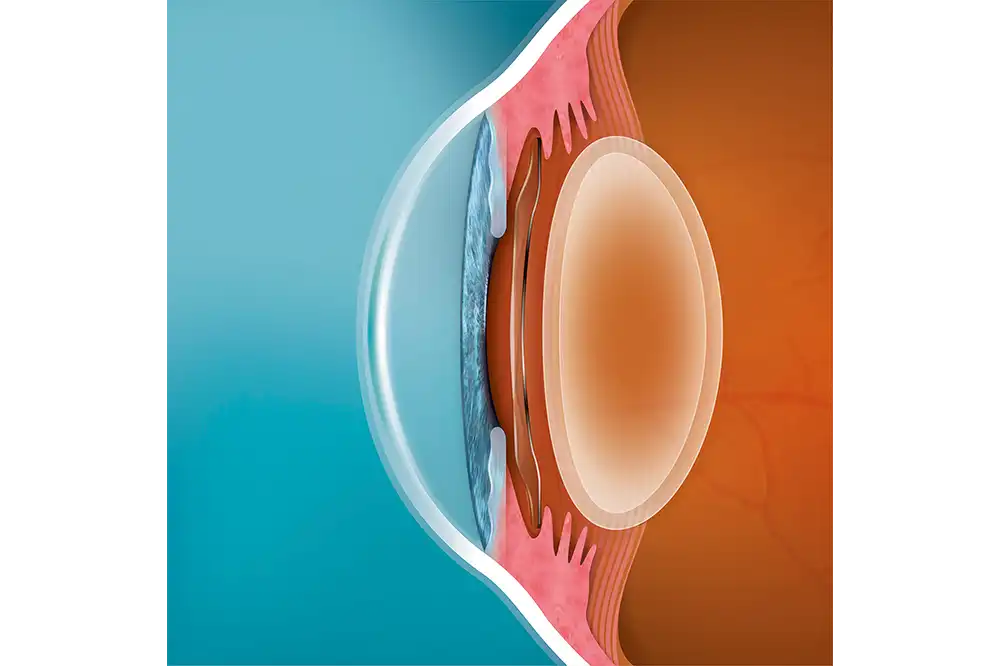
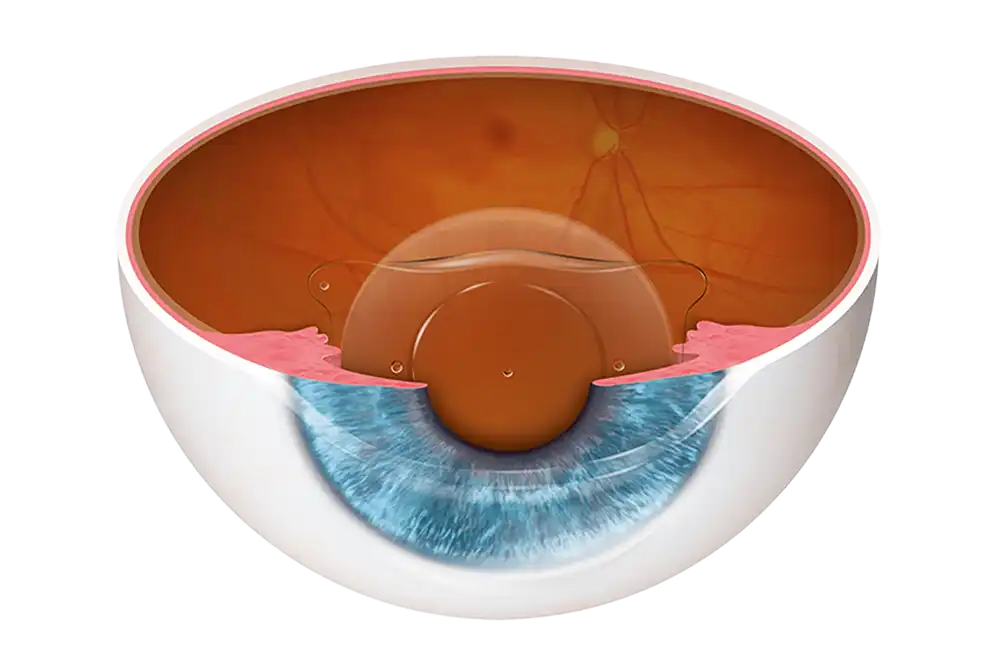
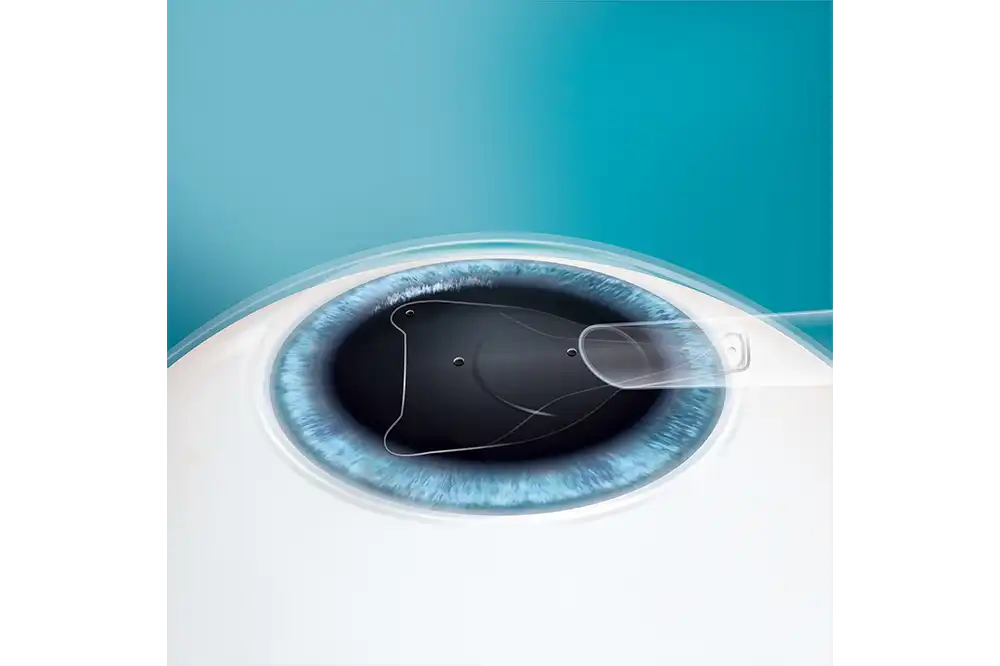
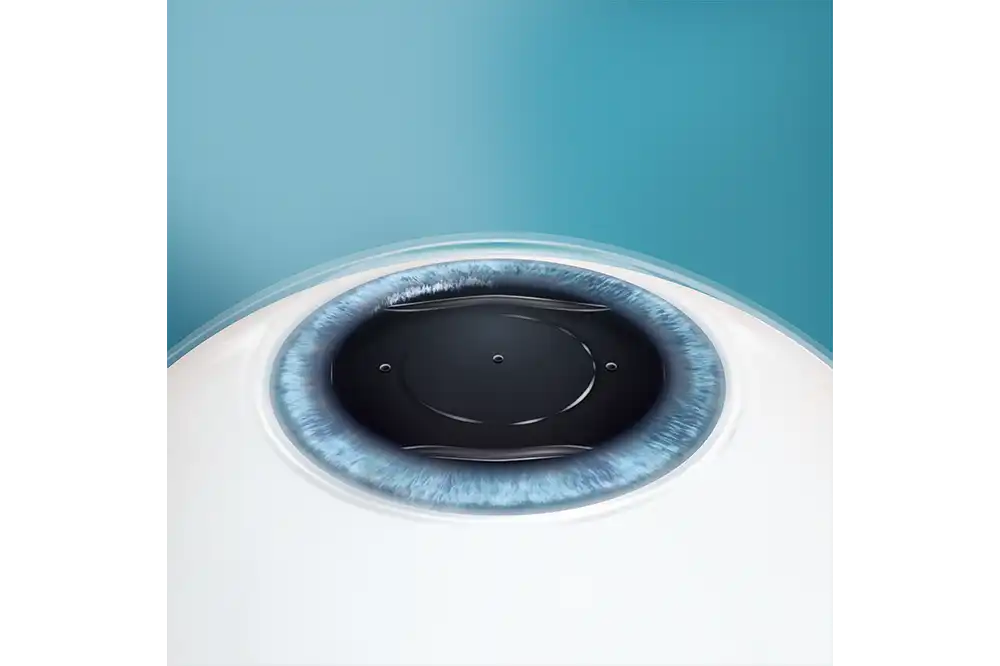
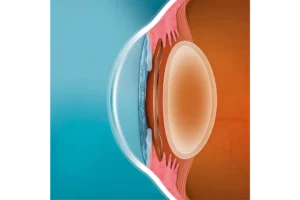
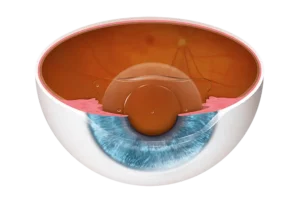
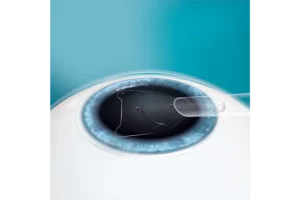
- L’EVO ICL est un implant phaque.
- EVO est placé directement derrière l’iris et devant le cristallin naturel.
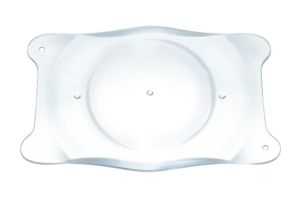
- L’ajout du port aquatique central à EVO facilite l’écoulement de l’humeur aqueuse à travers la lentille.
- La procédure EVO ICL ne nécessite pas l’ablation du tissu cornéen.
- La lentille EVO est un implant réversible.
- Le Collamer est un copolymère à base de poly-HEMA contenant un chromophore absorbant les UV et offrant une protection contre les UV.
- Cliniquement, il a été prouvé qu’EVO ne provoque ni n’aggrave le syndrome de l’œil sec.
- Des résultats cliniques avérés:
- La technologie ICL est étayée par plus de 1 000 publications évaluées par des pairs.
- Le dernier modèle, l’EVO ICL, a fait l’objet de plus de 500 études publiées, dont plus de 300 portent sur les résultats cliniques, certaines avec un suivi allant jusqu’à 10 ans.
Pourquoi cette lentille phake* change-t-elle vraiment la donne?
- Aucune iridotomie périphérique (IP) préopératoire nécessaire
- Sécurité et efficacité exceptionnelles1,2
- Excellente acuité visuelle postopératoire sans correction1 (postoperative uncorrected visual acuity)
- Taux élevé de satisfaction des patients1
- Conservation à la fois de la cornée et du cristallin naturel3
- Faible pourcentage d’effets secondaires1
Le Collamer® premium, un matériau exclusif de STAAR
Au cours des 20 dernières années, le Collamer a fait ses preuves avec plus de 3 millions de lentilles ICL implantées partout dans le monde. Il s’agit d’un copolymère de poly(HEMA) et de collagène qui offre une protection contre les UV. De plus, le Collamer minimise:
- les risques d’inflammation
- les phénomènes de flare (effet Tyndall)
- les réactions cellulaires8, 9
Faites profiter vos patients de procédures sûres qui donnent d’excellents résultats pour leur permettre de profiter pleinement de la vie avec une liberté visuelle optimale.
Brochure**
Téléchargez la brochure officielle EVO ICL de STAAR Surgical ci-dessous.
** These materials are intended for medical education. By proceeding, you certify that you are a licensed health care professional.
Official links
- STAAR’s Official Website
- STAAR’s Directions For Use
* avec conservation du cristallin naturel
IMPORTANT SAFETY INFORMATION FOR THE EVO/EVO+ ICL:
All physicians must complete the STAAR Surgical Visian ICL Physician Training Certification Program prior to using theEVO/EVO+ ICL in a clinical setting. Please review the EVO/EVO+ ICL Directions For Use (DFU) completely before performinga clinical procedure. INDICATIONS: The EVO/EVO+ ICL is indicated for phakic patients 21-60 years and pseudophakic patients 21 years and olderwith an anterior chamber depth (ACD) 2.8 mm or greater to correct/reduce myopia ranging from -0.5 diopters to -20.0diopters with up to 6.0 D of astigmatism. The EVO/EVO+ ICL is intended for placement in the posterior chamber of the eye. WARNING/PRECAUTION: Careful preoperative evaluation and sound clinical judgment should be used by the surgeon todecide the risk/ benefit ratio before implanting a lens in a patient with any of the conditions described in the DFU. Prior tosurgery, physicians should inform prospective patients of possible risks and benefits associated with the EVO/EVO+ ICL. ATTENTION: Reference the EVO/EVO+ ICL DFU available at https://edfu.staar.com/edfu/ for a complete listing of indications,contraindications, warnings and precautions.
Bibliographie
- Packer M. The Implantable Collamer Lens with a central port: review of the literature. Clinical ophthalmology (Auckland, NZ). 2018;12:2427-38.
- Kamiya K, Shimizu K, Igarashi A, Kitazawa Y, Kojima T, Nakamura T, et al. Posterior chamber phakic intraocular lens implantation: comparative, multicentre study in 351 eyes with low-to-moderate or high myopia. Br J Ophtalmol. 2018;102(2):177-81.
- Kohnen T. Phakic intraocular lenses: Where are we now? J Cataract Refract Surg. 2018;44(2):121-3.
- Ganesh S, Brar S, Pawar A. Matched population comparison of visual outcomes and patient satisfaction between 3 modalities for the correction of low to moderate myopic astigmatism. Clin Ophthalmol. (Auckland, NZ). 2017;11:1253-63.
- Martínez-Plaza E, López-Miguel A, López-de la Rosa A, et al. Effect of the evo+ visian phakic implantable collamer lens on visual performance and quality of vision and life. Am J Ophthalmol. 2021;226:117-25.
- Wei R, Li M, Zhang H, Aruma A, Miao H, Wang X, et al. Comparison of objective and subjective visual quality early after implantable collamer lens V4c (ICL V4c) and small incision lenticule extraction (SMILE) for high myopia correction. Acta Ophthalmol. 2020;98(8):e943-e50.
- Packer M. Evaluation of the EVO/EVO+ Sphere and Toric Visian ICL: Six month results from the United States Food and Drug Administration clinical trial. Clinical Ophthalmology. 2022;16:1541-53.
- Schild G, Amon M, Abela-Formanek C, Schauersberger J, Bartl G, Kruger A. Uveal and capsular biocompatibility of a single-piece, sharp-edged hydrophilic acrylic intraocular lens with collagen (Collamer®): 1-year results. J Cataract Refract Surg 2004;30(6):1254-8.
- Brown DC, Ziemba SL. Collamer® intraocular lens: clinical results from the US FDA core study. J Cataract Refract Surg. 2001;27(6):833-40. 10. Igarashi A. Posterior chamber phakic iols vs. Lasik: Benefits and complications. Expert Review of Ophthalmology. 2019;14(1):43-52.